Project Background:
Water is one of South Africa's most valuable natural resources, supporting every aspect of daily life, from
households and agriculture to industry and the environment. As the country's population continues to grow
and climate conditions become increasingly unpredictable, protecting and managing water resources has become
more important than ever.
This topic was chosen to explore the importance of water in South Africa and to better understand the
challenges surrounding its availability and use. Water scarcity affects millions of people across the
country, making it essential to investigate how water is sourced, consumed, and conserved.
Research Summary
This research examines three key areas: an overview of South Africa's water resources, patterns of water
consumption, and the impact of water scarcity and sustainable usage. By combining reliable research with
questionnaire findings, this study aims to provide a clearer understanding of the country's water situation
and highlight the importance of responsible water management for future generations.
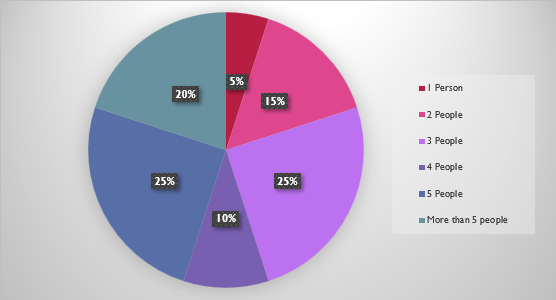
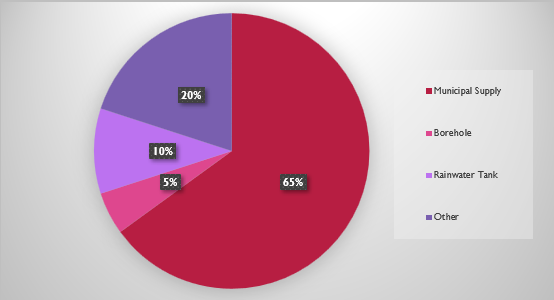
The study revealed that most participants live in medium to large households, with the majority relying on
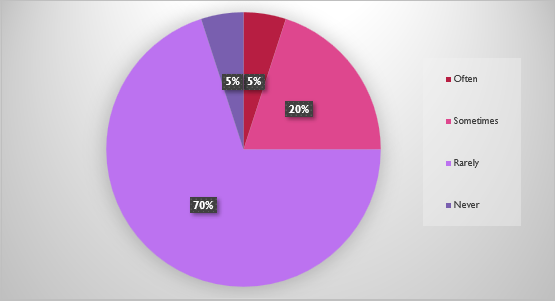
the municipal water supply as their primary source of water. Although most respondents reported that they
rarely experience water shortages or restrictions, the presence of households that experience shortages more
frequently highlights that water availability remains an issue in certain areas.
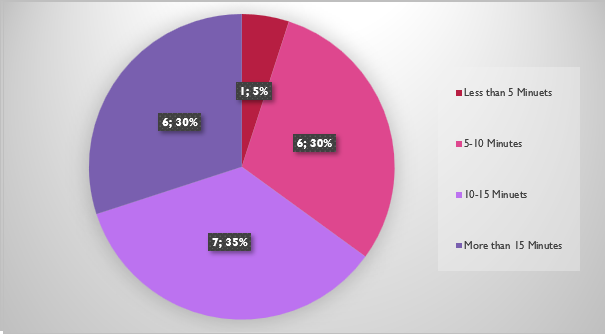
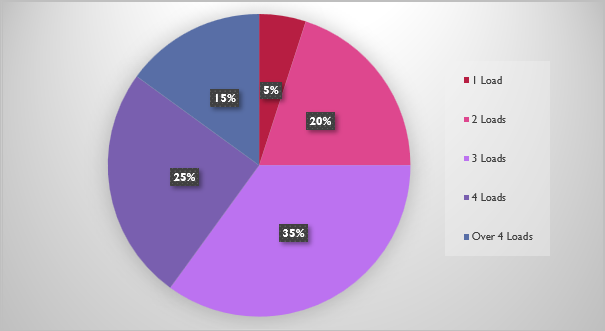
Water consumption habits vary between households. Most participants spend between five and fifteen minutes
showering and complete between two and four loads of washing each week, suggesting moderate household water
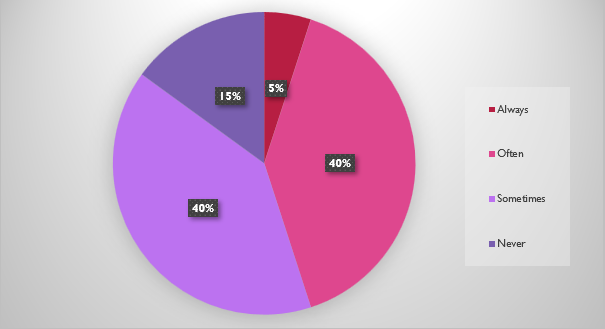
usage. Encouragingly, the majority of respondents indicated that they practise water-saving habits either
often or sometimes and believe that their households use water responsibly. However, a small number admitted
to rarely or never adopting water-saving practices, demonstrating that there is still room for improvement
in encouraging responsible water use.
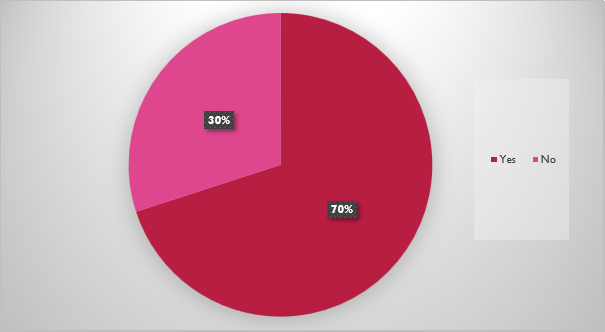
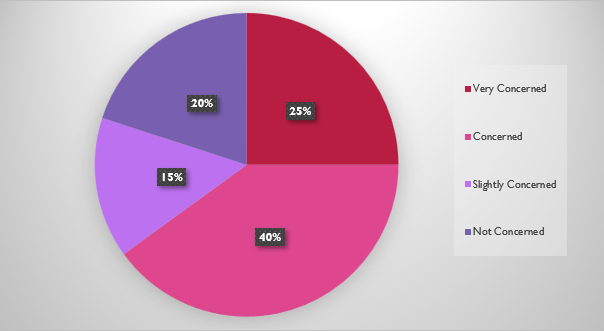
When asked about water scarcity, most participants expressed concern about South Africa's future water
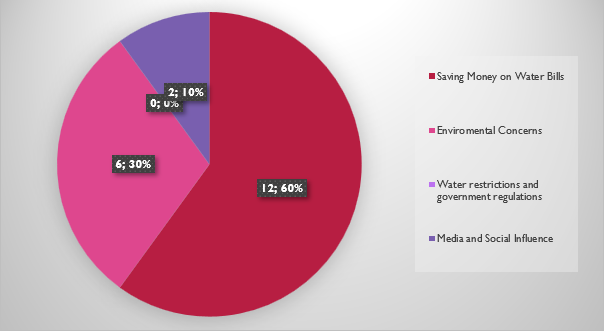
security. The questionnaire further showed that saving money on water bills is the strongest motivation for
conserving water, followed closely by environmental concerns. This suggests that both financial incentives
and environmental awareness play an important role in influencing people's behaviour towards water
conservation.
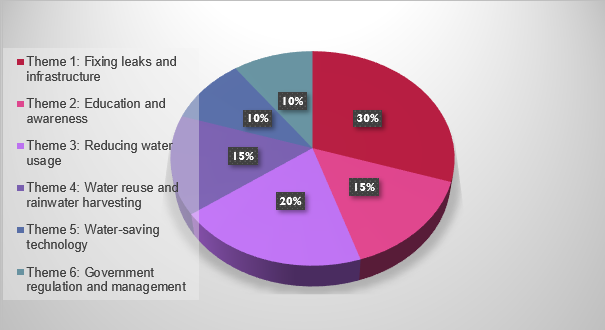
Participants reinforced these findings by identifying several practical solutions for reducing
water consumption in South Africa. The most common recommendations included repairing leaking municipal
infrastructure, reducing unnecessary household water usage, increasing public education and awareness,
promoting rainwater harvesting and water reuse, installing water-efficient devices, and strengthening
government management of water resources. These responses demonstrate that participants recognise both
individual and collective responsibility in protecting South Africa's limited water resources.
Overall, the questionnaire findings show that while many households are already making an effort to use water
responsibly, greater investment in infrastructure, public awareness, and sustainable water management is
still required. By combining responsible individual behaviour with effective government action, South Africa
can move towards a more secure and sustainable water future.
Water Resources in South Africa
South Africa is a naturally water-scarce country with limited freshwater resources. Understanding where
households obtain their water, how many people share these resources, and how frequently water shortages
occur provides valuable insight into the country's current water situation.
Water Consumption
Water consumption patterns provide valuable insight into how households use water during their daily
activities. Everyday habits, such as showering, doing laundry, and practising water-saving measures, all
contribute to the amount of water consumed. Understanding these patterns helps identify opportunities to
reduce unnecessary water usage and encourages more sustainable habits that can benefit both households and
the environment.
The Scarcity of Water
Water scarcity is one of the greatest environmental challenges facing South Africa today. As demand for water
continues to increase and climate conditions become more unpredictable, sustainable water management is
essential for protecting this limited resource. Understanding public attitudes towards water scarcity, the
factors that motivate water conservation, and the solutions people believe will make a difference provides
valuable insight into how South Africa can work towards a more sustainable future.
Conclusion
The research shows that while many South Africans are aware of the importance of conserving water, there are
still challenges that need to be addressed. Most respondents demonstrated responsible water-use habits and
recognised the growing threat of water scarcity, yet the findings also revealed opportunities to improve
conservation efforts through everyday behavioural changes and greater public awareness. The questionnaire
highlighted that both individuals and government have an important role to play, from adopting sustainable
household practices to investing in reliable infrastructure and repairing leaking water systems. Overall, this
study demonstrates that ensuring South Africa's future water security will require cooperation, education, and
responsible management of one of the country's most valuable natural resources. By working together to conserve
water today, we can help protect this essential resource for future generations.
Conservation, responsibility and sustainability. The foundation of South Africa's water future.